

Black women experience some of the most persistent and consequential pay disparities
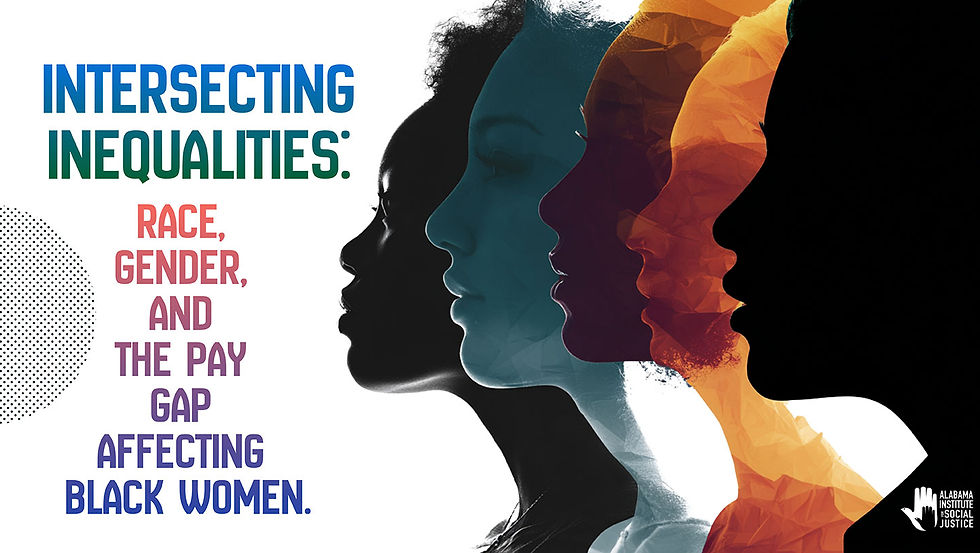
Equal pay is often framed as a binary issue, men versus women, but that simplification masks deeper, intersecting inequalities. In the United States, Black women experience some of the most persistent and consequential pay disparities, earning substantially less than white men, white women, and often less than Black men in comparable positions.
The scale of the gap is stark and measurable: recent analyses show that Black women on average earn roughly 63 cents for every dollar earned by non‑Hispanic white men (National Women’s Law Center, 2023). By comparison, white women typically earn in the high‑70s to low‑80s range and Hispanic women in the mid‑50s to mid‑60s, reflecting wide variation across race and ethnicity (American Association of University Women, 2024-2026, AAUW and the Institute for Women’s Policy Research, 2024, IWPR). These disparities persist even after accounting for education and experience and are visible in government data on median weekly earnings, where Black women remain below their white peers (Bureau of Labor Statistics). The effect is cumulative: research by AAUW and IWPR finds that the lifetime earnings losses associated with persistent pay gaps translate into substantially smaller retirement savings and long‑term wealth for Black women, amounts that can total hundreds of thousands of dollars over a career, thereby reinforcing racial wealth gaps across generations. These statistics underscore the urgency of examining the historical and structural causes that sustain such gaps.
Understanding these disparities requires tracing a through-line from historical exclusion to contemporary structural barriers. Only by linking past injustices to present mechanisms can we craft remedies powerful enough to close the gap.
The roots of the disparity stretch back to slavery, when Black women were subjected to uncompensated labor and bodily exploitation that denied them both income and the ability to accumulate wealth. Enslaved labor built economic value for others while leaving Black families bereft of property and intergenerational capital. That fundamental dispossession established an economic starting point very different from that of white families and set patterns of labor and social perception, about who does certain kinds of work and whose labor is valued, that would endure long after emancipation.
Following the Civil War, discriminatory labor patterns and segregation confined many Black women to low-paid, unstable occupations such as domestic service and agricultural work. These jobs were not merely poorly paid; they were frequently excluded from the labor protections and social benefits that white workers gained. Jim Crow laws, segregated education, and discriminatory hiring practices narrowed both the job options and the upward mobility available to Black women, reinforcing occupational segregation and entrenching economic inequality across generations.
The New Deal era further institutionalized disparities through exclusions that disproportionately affected Black women. Social Safety Net programs that became pillars of modern labor policy, like Social Security, initially omitted agricultural and domestic workers, sectors where Black women were overrepresented. Consequently, entire cohorts of Black women were denied pensions, unemployment benefits, and workplace protections for decades, widening the gulf in financial security and lifetime earnings between Black women and their white counterparts.
Labor organizations that improved wages and conditions for many workers often failed Black workers as well. Unions historically excluded Black members or segregated them into low-wage positions, and discriminatory promotion and hiring practices limited access to higher-paying, unionized jobs. As a result, the wage-raising and stabilizing effects of unionization were unevenly distributed, leaving Black women less likely to benefit from collective bargaining gains that primarily helped white male workers.
Cultural stereotyping has reinforced these economic disadvantages by devaluing the kinds of work associated with both women and Black workers. Longstanding tropes, about Black women being naturally suited to domestic labor or less deserving of professional protection, have justified lower pay and limited social recognition of the skill involved in caregiving and service work. The intersection of racial and gendered stereotypes means that jobs dominated by Black women are often labeled as “women’s work” and “Black work,” receiving poorer compensation and fewer pathways to advancement regardless of their societal importance.
Today’s mechanisms of inequality are both continuations of this history and new forms of structural constraint. Occupational segregation persists: Black women remain concentrated in lower-paid sectors such as healthcare aides, childcare, hospitality, and retail. These fields are essential to the economy, yet they are chronically undervalued, with limited benefits, unpredictable schedules, and constrained opportunities for upward mobility. Such labor market sorting sustains wage gaps even as educational attainment among Black women rises.
Even with higher education, Black women do not receive equal returns on credentials. College degrees do not fully close the pay gap; discrimination in hiring, promotion, and professional networks means that Black women with similar credentials as white peers often earn less and are underrepresented in leadership roles. In addition, the motherhood penalty, reduced pay and opportunities following childbearing, affects women broadly but intersects with racial dynamics, as Black mothers frequently lack access to supportive policies like paid leave and affordable childcare that could mitigate career disruption.
Criminalization and its collateral consequences also constrain earnings. Over-policing, higher incarceration rates, and the employment barriers that accompany criminal records disproportionately affect Black communities, interrupting career trajectories and reducing lifetime earnings potential. These factors, combined with persistent pay secrecy, implicit bias, and weak enforcement of anti-discrimination laws, create an environment where disparities are sustained and difficult to challenge.
Analyzing these patterns through an intersectional lens, an approach developed by Kimberlé Crenshaw, clarifies that Black women’s wage inequality is not simply the sum of racism plus sexism. Rather, discrimination operates at the intersection of race and gender to produce unique barriers that cannot be addressed by policies targeting only one dimension. Consequently, effective solutions must deliberately address how race and gender combine to shape labor market outcomes.
Policy responses therefore need to be comprehensive and targeted. Strengthening enforcement of equal pay and anti-discrimination laws, including improved data collection disaggregated by race and gender, would make disparities more visible and actionable. Reforms such as pay transparency requirements, regular pay equity audits, and robust remedies for unjustified gaps would pressure employers to correct inequities. Simultaneously, raising wages in undervalued sectors, through higher minimum wages and sector-focused wage floors, would directly improve earnings for many Black women.
Beyond wage policies, bolstering workplace supports is essential. Universal or subsidized childcare, paid family leave, predictable scheduling, and investments in affordable healthcare reduce the motherhood penalty and allow for continuous, advancing careers. Investing in targeted training, apprenticeships, and recruitment for high-growth, higher-paying fields can expand access to better jobs, while protections for collective bargaining can strengthen worker voice in low-wage sectors where Black women are concentrated.
Finally, addressing the pay gap requires tackling broader structural inequities: criminal justice reform, equitable access to housing and education, and policies that support wealth-building, such as homeownership assistance and student debt relief, could help close the foundation-level divides that shape long-term economic outcomes. Only by pairing labor-market reforms with these systemic changes can policy erase the historical inequities that have compounded over generations.
In sum, the pay disparity affecting Black women is the product of a long history of exclusion, cultural devaluation, and ongoing structural discrimination. Remedies that treat gender and race as separate problems will fall short; meaningful progress depends on intersectional policies that confront roots and symptoms alike. Achieving equal pay for Black women is not only a matter of fairness but also a necessary step toward a more equitable and economically resilient society.